California is making history in early childhood education. Beginning with the 2025-26 school year, the state's Universal Transitional Kindergarten program reaches full implementation, offering free, public early education to every four-year-old whose birthday falls on or before September 1. It's the nation's most ambitious expansion of public prekindergarten, representing a $2.7 billion investment in the earliest years of learning.
For California families, TK represents a significant shift in the early education landscape. But understanding how the program works, whether it's right for your child, and how it compares to other options requires navigating a complex set of rules, timelines, and trade-offs. This guide walks you through everything you need to know.
What Transitional Kindergarten Actually Is
Transitional Kindergarten isn't preschool, and it isn't quite kindergarten either. Under California Education Code Section 48000, TK is officially defined as the first year of a two-year kindergarten program. Children who complete TK then advance to traditional kindergarten the following year before entering first grade.
The distinction matters because it shapes everything about how TK classrooms operate. Unlike kindergarten, which follows the Common Core State Standards, TK instruction aligns with the California Preschool/Transitional Kindergarten Learning Foundations (PTKLF), a framework specifically designed for children ages three to five and a half. The PTKLF describes developmentally appropriate milestones in areas including social-emotional development, language and literacy, mathematics, and physical development—recognizing that most kindergarten standards are simply too advanced for younger four-year-olds.
The California Department of Education released an updated version of these foundations in July 2024, creating stronger alignment between preschool, TK, and kindergarten as part of the state's broader Preschool through Third Grade alignment initiative. The revised foundations emphasize play-based learning, hands-on exploration, and developmentally informed instruction rather than the academic rigor increasingly found in traditional kindergarten classrooms.
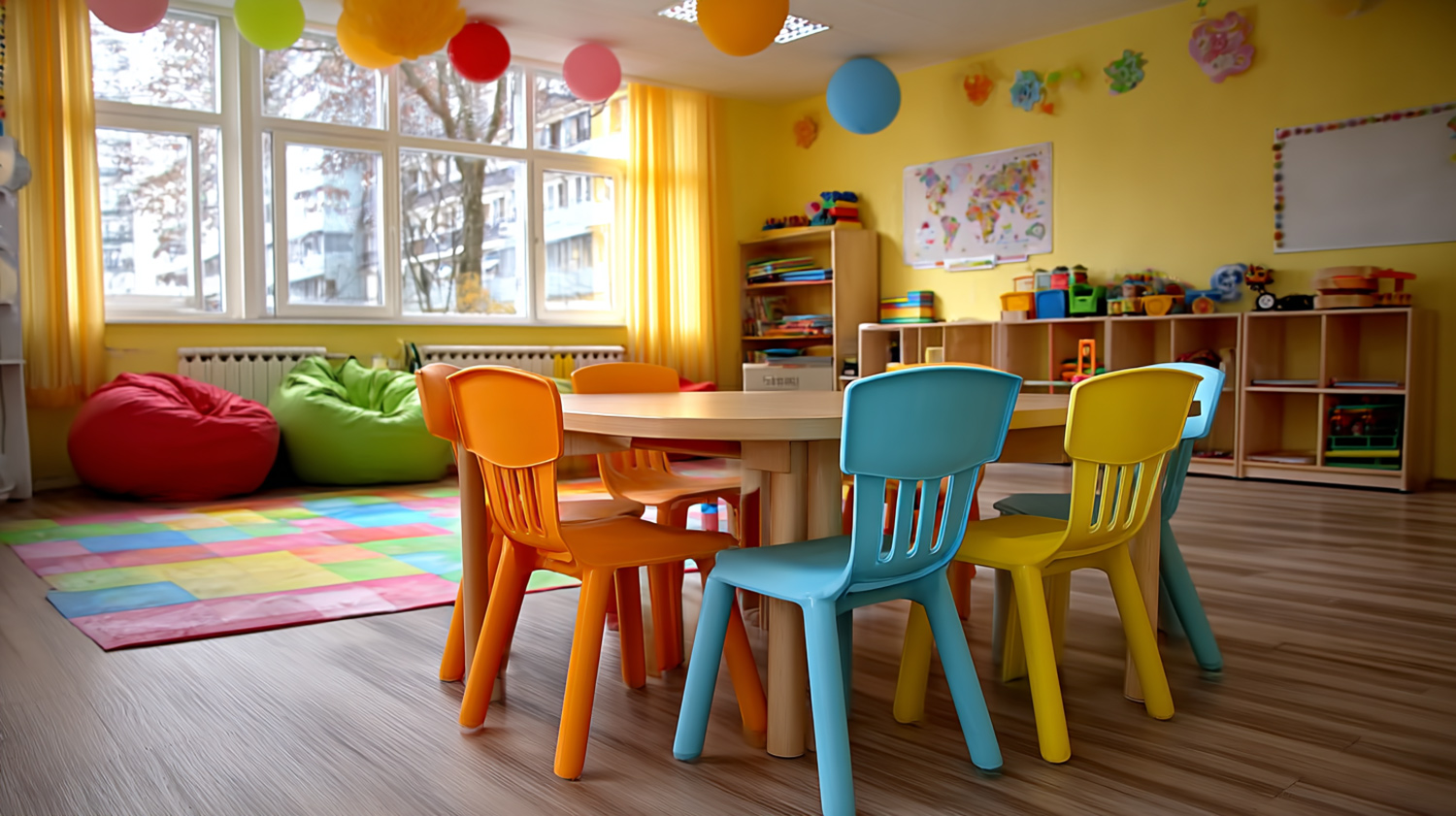
In practical terms, a high-quality TK classroom looks quite different from what most parents remember of kindergarten. Children spend much of their day in active, hands-on learning experiences: block building, dramatic play, art exploration, and outdoor activities. Academic content is woven through these experiences rather than delivered through worksheets or seat time. Teachers might introduce early math concepts through counting games during snack time, build literacy skills through interactive read-alouds and storytelling, and develop social-emotional competencies through collaborative projects and guided conflict resolution.
• • •
Who Is Eligible and When
California's Universal TK expansion has rolled out gradually over four years, with eligibility expanding each year based on birthday cutoffs. Here's how the timeline has unfolded:
- 2022-23: Children turning five between September 2 and December 2 were eligible
- 2023-24: Eligibility extended to children turning five between September 2 and February 2
- 2024-25: Eligibility extended to children turning five between September 2 and June 2
- 2025-26 and beyond: All children who turn four by September 1 are eligible
The 2025-26 school year marks full implementation, when Universal TK becomes available to every age-eligible four-year-old in California regardless of family income, where they live, or any other factor. Local educational agencies—school districts and charter schools—are required to offer TK to all eligible children who wish to enroll. No age-eligible child may be denied access or placed on a waiting list.
A critical point for parents: while districts must offer TK, they aren't required to have TK classrooms at every school site. Your neighborhood elementary school may or may not have a TK program, though your district must provide access somewhere within its boundaries.
• • •
TK Is Not Mandatory
California law does not require children to attend school until age six. This means TK enrollment is entirely optional for families, as is kindergarten. Parents retain complete choice over whether to enroll their four-year-old in TK, continue with their current preschool arrangement, or keep their child at home.
The optional nature of TK reflects California's recognition that families have different needs and circumstances. Some four-year-olds thrive in structured school environments; others benefit from additional time in smaller preschool settings or at home. Some working families need extended hours that TK alone may not provide; others value the community connections their child has built in established preschool programs. It's worth noting that momentum has been building in the state Legislature to eventually make kindergarten mandatory and full-day, which could affect the TK-to-kindergarten pathway in future years. But for now, both years remain at parents' discretion.
• • •
Teacher Qualifications and Classroom Requirements
One of the distinguishing features of California's TK program is its emphasis on teacher qualifications. All TK lead teachers must hold a valid California teaching credential, typically a Multiple Subject Credential—the same credential required for elementary school teachers. But TK teachers face additional requirements beyond what's needed to teach older grades.
As of August 1, 2025, all TK teachers who were first assigned to a TK classroom after July 1, 2015 must meet one of the following requirements: at least 24 units in early childhood education, child development, or both; professional experience in a classroom setting with preschool-age children that the local educational agency deems comparable to those 24 units; or a Child Development Teacher Permit issued by the Commission on Teacher Credentialing.
Teachers who were already teaching TK on or before July 1, 2015 are grandfathered in and can continue teaching without meeting these additional requirements. The 24-unit requirement has been delayed several times since its original 2020 target date, but August 2025 represents the firm deadline.
The early childhood education requirement exists because teaching four-year-olds demands specialized knowledge. Young children learn differently than elementary-age students, and effective TK instruction requires understanding of child development, age-appropriate pedagogy, and strategies for supporting social-emotional growth alongside academic readiness.
Classroom Ratios
California has also established specific staffing requirements to ensure TK classrooms provide adequate adult attention for young learners. Beginning in the 2025-26 school year, TK classrooms must maintain a 1:10 adult-to-student ratio throughout the instructional day. This is significantly lower than typical elementary classroom ratios and reflects the greater supervision needs of four-year-olds.
In practice, this typically means a classroom of 20 students would have two adults, or a classroom of 24 students would have at least two adults (with some classrooms adding a third to better meet the ratio). The maximum class size for TK is capped at 24 students.
The second adult in a TK classroom doesn't need to be a credentialed teacher. Districts can use paraprofessionals, instructional aides, or classified staff to meet the ratio requirement. Some districts have developed innovative co-teaching models, partnering TK teachers with California State Preschool Program staff to create blended programs.
• • •
Program Structure: Full-Day, Half-Day, and Extended Care
Like kindergarten, TK can be offered as either a full-day or half-day program, with the decision left to individual school districts. Many districts have moved toward full-day schedules to better support working families and provide more learning time, though some continue offering part-day options.
For funding purposes, TK students must be engaged in educational activities under the supervision of a certificated employee for at least 180 minutes per day. This is the minimum instructional time required for districts to claim state funding based on average daily attendance.
A significant consideration for many families is that TK hours often don't align with typical work schedules. A school day that runs from 8:00 AM to 2:30 PM may work for some families but leaves substantial gaps for parents working traditional hours. California has attempted to address this through the Expanded Learning Opportunities Program (ELOP), which provides before-school, after-school, and summer care for students in TK through sixth grade. Districts with high concentrations of low-income students are required to offer ELOP, though availability and quality vary.
Some districts have created blended programs that combine TK with the California State Preschool Program to offer extended hours, essentially creating a full-day experience that might run from 7:00 AM to 5:30 PM. These blended programs follow the more stringent requirements of both programs—in the case of CSPP, that means an 8:1 student-to-adult ratio and additional assessment requirements.
• • •
How TK Compares to Other Early Education Options
Universal PreKindergarten (UPK) is California's umbrella term for the mixed delivery system of early education programs serving three- and four-year-olds. While TK is the only universal entitlement within this system—available free to all age-eligible children regardless of income—families have several other options to consider.
Head Start
Head Start is a federally funded program that serves low-income families, providing comprehensive early childhood education along with health services, nutrition support, and family engagement programming. Head Start goes beyond academics to address children's physical health, dental care, mental health needs, and family well-being.
Head Start maintains stricter ratios than TK (1:10 adult-to-student ratio with maximum class sizes of 20) and requires the use of specific assessment tools. Programs must meet federal performance standards and undergo regular monitoring. For eligible families, Head Start offers a holistic support system that TK doesn't replicate.
However, the TK expansion has significantly impacted Head Start enrollment in California. Research from UC Berkeley found that Head Start centers in the state lost approximately 43,000 preschoolers as TK expanded, leading to classroom closures and uncertain futures for many programs. For families who value Head Start's comprehensive services and community connections, this represents a difficult trade-off.
California State Preschool Program (CSPP)
The California State Preschool Program serves income-eligible families with both three- and four-year-olds, offering center-based and home-based options through schools and community organizations. CSPP follows the same curriculum foundations as TK but operates with different staffing requirements and typically serves families who meet income thresholds.
With TK now available to all four-year-olds, CSPP is increasingly shifting to serve three-year-olds, potentially expanding access to two full years of high-quality early education for low-income families. Families enrolled in TK can also access part-day CSPP for extended care, provided the hours don't overlap.
Private Preschool
Private preschools offer wide variation in philosophy, schedule, and cost. Licensed center-based preschools in California must maintain a maximum 1:12 teacher-to-student ratio, while family child care programs often operate at even lower ratios (1:6 or 1:4). Private programs may offer greater flexibility in hours, specialized curricula (Montessori, Reggio Emilia, language immersion), and continuity of care from infancy through kindergarten entry.
The cost advantage of TK is obvious: it's free. Private preschool in California can easily run $1,000 to $2,500 per month or more, depending on location and program type. For many families, free public TK represents substantial financial relief even if it requires adjusting work schedules or piecing together extended care.
But cost isn't the only consideration. Some early childhood educators and advocates have raised concerns about whether TK classrooms, operated within the K-12 system, maintain appropriate developmental practices for four-year-olds. Research has shown that only about 25 percent of TK teachers have previous preschool or early childhood education experience—most come from kindergarten backgrounds where instructional approaches may be more academic and less play-based.
• • •
What Research Says About TK's Benefits
Studies of California's TK program have shown positive effects on school readiness, particularly for children who would otherwise lack access to quality early education. Research from the American Institutes for Research found that English learners who attend TK enter kindergarten with stronger literacy and math skills than peers who did not attend TK.
The broader research on early childhood education consistently demonstrates long-term benefits: higher graduation rates, better employment outcomes, lower rates of criminal activity, and improved health across the lifespan. These findings have driven the national push for universal prekindergarten and inform California's substantial investment in TK.
However, the quality of any early childhood program matters enormously. Research shows that high-quality programs produce meaningful gains while poor-quality programs may provide little benefit or even harm. Quality factors include teacher qualifications and training, adult-to-child ratios, curriculum and instruction, and the overall learning environment. California's TK requirements aim to establish quality floors, but implementation varies across the state's more than 1,000 school districts.
• • •
Making the Decision: Is TK Right for Your Child?
The choice between TK and other options is deeply personal, depending on your child's development, your family's needs, and what programs are actually available in your community.
Consider TK if your child is socially ready for a larger school setting, if the free cost represents meaningful financial relief for your family, if your neighborhood TK program demonstrates strong developmental practices, or if continuity into the same school system for kindergarten appeals to you.
An additional year of preschool might be better if your child thrives in smaller group settings with lower ratios, if your current program offers specialized approaches that align with your child's learning style, if schedule flexibility is essential for your work situation, or if your child would benefit from being among older peers in a mixed-age preschool environment.
Visit programs before deciding. Ask to observe a TK classroom in action. Notice whether the environment looks play-based and developmentally appropriate, or more like a scaled-down elementary classroom. Talk to teachers about their backgrounds and philosophy. Ask about outdoor time, nap policies (if relevant for your child), and how they handle social-emotional challenges.
• • •
How to Enroll
TK enrollment typically follows the same timeline and process as kindergarten enrollment in your school district. Many districts open enrollment in late fall or early winter for the following school year, with application deadlines often falling in January or February.
Start by identifying your local school district—if you're unsure, entering your address into the Great Schools website can help you find it. Contact the district's enrollment office or visit its website to learn about TK availability, application procedures, and deadlines.
Enrollment packets typically require proof of age (birth certificate), proof of residency, and immunization records. TK students must meet the same vaccination requirements as kindergartners. Some districts conduct developmental screenings as part of the enrollment process, though these are used for planning purposes rather than to deny enrollment.
If your neighborhood school doesn't offer TK, ask your district about available programs elsewhere in the district. Some larger districts operate centralized enrollment systems where you can indicate preferences among multiple schools.
• • •
Preparing Your Child for TK
Teachers recommend focusing on practical skills that will help children navigate the school environment comfortably. Fine motor activities like cutting with safety scissors, holding crayons and pencils, and using glue sticks help build school-readiness skills. Counting everyday objects and talking about concepts like bigger and smaller, more and less, build early math awareness.
Reading together daily remains one of the most important things parents can do. Beyond building early literacy skills, shared reading creates positive associations with books and learning. Choose books your child enjoys and make the experience warm and connected rather than instructional.
For children who haven't been in group care settings, the biggest adjustment is often separating from parents. If possible, practice shorter separations before school begins. Talk positively about the upcoming experience, acknowledge that it's normal to feel nervous, and develop goodbye rituals that provide comfort and predictability.
• • •
Looking Ahead
California's Universal TK represents a historic investment in early childhood education, making the state a national leader in providing free public early education to four-year-olds. As the program reaches full implementation, its success will depend on continued attention to quality: ensuring teachers have the training and support they need, maintaining appropriate developmental practices, and providing adequate resources for facilities and materials.
For families, TK adds a valuable option to the early education landscape. Whether it's the right choice depends on individual circumstances—but having the option available to every California four-year-old, regardless of income or location, marks a meaningful step toward more equitable access to early learning.
The California Department of Education maintains updated information and resources at its Universal Prekindergarten page, including FAQs, curriculum guidance, and links to local district contacts. Your school district's website and enrollment office are the best sources for program-specific information in your community.