
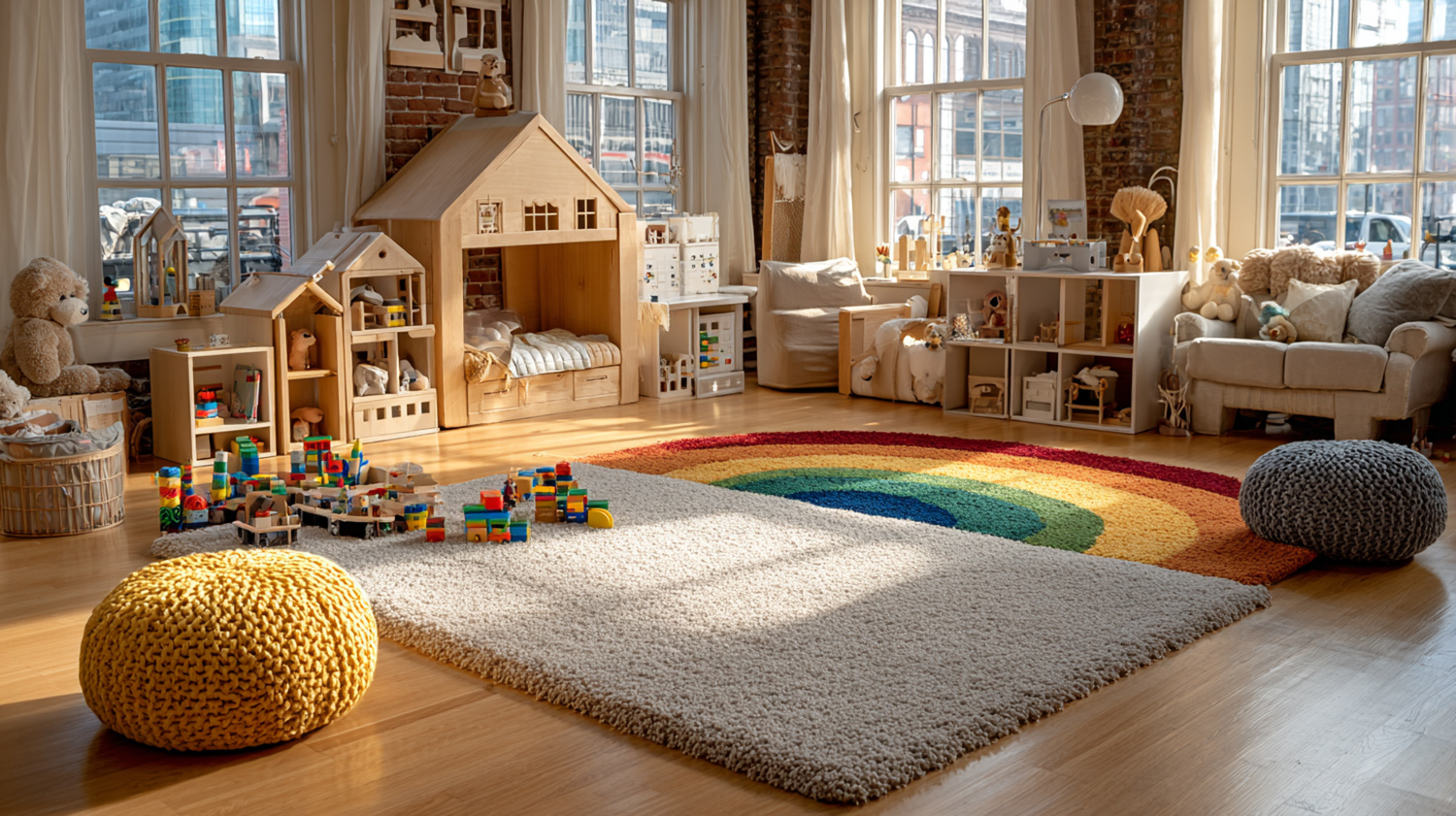
You've toured three preschools in two weeks. The first had tiny wooden chairs and child-sized brooms, with three-year-olds carefully spooning beans from one bowl to another while five-year-olds helped them count. The second had a circle-time carpet, alphabet posters, and a cheerful teacher leading everyone in the same song. The third featured easels everywhere and children huddled around a terrarium, apparently conducting a weeks-long investigation of snails.
Each director spoke with conviction about why their approach was best. You nodded along, took notes, and drove home feeling more confused than when you started.
If this sounds familiar, you're not alone. The preschool landscape has never offered more choices—Montessori, play-based, Waldorf, Reggio Emilia, academic-focused, nature-based—and parents are understandably anxious about making the right call. Social media compounds the pressure with its endless debates about which approach produces the happiest, most successful children. The stakes feel enormous, the information overwhelming.
Here's what the research actually says: good preschool matters, and several approaches can deliver it. But the specific method matters less than you might think—and your individual child matters more than any curriculum.
• • •
The most rigorous studies on preschool philosophies come with an important caveat: they're surprisingly hard to conduct well. Children aren't randomly assigned to different schools the way patients are assigned to clinical trials. Parents who seek out Montessori or Waldorf tend to differ from those who don't, in ways both measurable and not. Researchers try to control for these differences, but they can never eliminate them entirely.
That said, we've learned a great deal in recent years. A landmark 2006 study published in Science by Angeline Lillard and Nicole Else-Quest used a clever workaround: they compared children who won admission to a public Montessori school through a random lottery with those who applied but lost. This lottery-based design controlled for the self-selection problem. The Montessori children showed advantages in reading, math, and executive function by age five, and also demonstrated better social skills, including a stronger sense of fairness and more positive playground interactions.
A 2017 longitudinal study by Lillard and colleagues, also using lottery-based admission, found that Montessori preschoolers showed greater growth in academic achievement, social understanding, and what researchers call "mastery orientation"—an eagerness to tackle challenges rather than avoid them. Perhaps most striking, the Montessori children from lower-income families performed nearly as well as higher-income children in traditional programs, suggesting the approach may help close achievement gaps.
A 2023 meta-analysis in the journal Contemporary Educational Psychology synthesized data from 33 studies and over 21,000 children. It found that Montessori education showed positive effects across multiple domains, with the strongest impacts on academic achievement and meaningful but smaller effects on creativity, motor skills, social skills, and cognitive abilities. But the authors also noted substantial variability in results—suggesting that implementation quality matters enormously.
And here's where things get complicated: not all Montessori programs are created equal. A 2012 study by Lillard comparing "classic" Montessori programs (those adhering closely to Maria Montessori's original methods) with "supplemented" versions that added conventional practices found that only the classic programs showed advantages. Schools that called themselves Montessori but mixed in traditional elements—worksheets, teacher-directed lessons, rewards systems—didn't produce the same benefits. The name on the door tells you less than what actually happens inside the classroom.
• • •
Meanwhile, play-based approaches have their own body of research. The Harvard Center on the Developing Child has documented how play helps build "executive function"—the mental skills that help children focus attention, remember instructions, and regulate impulses. These abilities turn out to be strong predictors of later academic success, sometimes stronger than early academic content itself.
The science on play is unequivocal: young children learn best through hands-on, experiential engagement with their environment. A 2023 book from Harvard's Project Zero research team, drawing on eight years of international studies, found that "playful learning"—experiences that are joyful, meaningful, and actively engaging—supports academic and social-emotional development simultaneously. The false dichotomy between "play" and "learning" obscures the reality that for young children, they're often the same thing.
What about programs that push academics early? A comprehensive study tracked Tennessee's voluntary pre-K program and found a troubling pattern: children who attended showed initial gains, but these faded quickly. By third grade, the pre-K graduates were actually performing worse than peers who hadn't attended. The researchers speculated that inappropriate academic pressure in early childhood may undermine the foundational skills—curiosity, persistence, self-regulation—that matter most for long-term success.
This doesn't mean academic content is bad for preschoolers. It means how and when it's introduced matters. A child who learns letters through songs, stories, and playful exploration may internalize them differently than one drilled with flashcards. Both might recognize the alphabet by kindergarten, but they may have developed very different relationships with learning itself.
• • •
Beyond Montessori and traditional play-based programs, several other philosophies deserve consideration.
Reggio Emilia, developed in northern Italy after World War II, centers on the idea that children have "a hundred languages"—many ways of expressing understanding beyond words. The approach emphasizes long-term projects driven by children's interests, with extensive documentation of the learning process. A major evaluation by researchers including Nobel laureate James Heckman found that compared to no preschool, the Reggio Approach significantly improved employment outcomes, socio-emotional skills, and high school graduation rates measured decades later. However, when compared to other quality preschool programs, the advantages were less clear—suggesting that Reggio's benefits may come from high-quality implementation rather than the specific philosophy itself.
Waldorf education, founded by Rudolf Steiner, emphasizes imagination, nature connection, and developmental stages, deliberately delaying formal academics until around age seven. A 2012 study of public Waldorf schools found an interesting pattern: students scored lower on standardized tests in early grades but higher by seventh and eighth grade, suggesting a "slow build-up" approach that may pay dividends later. Waldorf advocates point to the philosophy's emphasis on creativity and intrinsic motivation, though critics worry about the delayed reading instruction.
The research on Waldorf and Reggio Emilia is thinner than for Montessori, in part because these approaches resist standardized assessment and value qualities—wonder, creativity, community connection—that are harder to measure. This doesn't mean these outcomes don't matter; it means we should hold our conclusions more loosely.
• • •
Perhaps the most important question isn't "which approach is best?" but "which approach is best for my child?"
Child development researchers have long studied what they call "goodness of fit"—the match between a child's temperament and their environment. A 2012 study published in Early Education and Development found that children with different temperaments responded differently to classroom characteristics. Children who were naturally cautious or withdrawn made greater gains in classrooms with strong instructional support, while more impulsive children benefited especially from high emotional support.
This has real implications for preschool choice. Consider a child who is highly active, struggles to sit still, and thrives on novelty. A Montessori classroom, with its freedom of movement and child-chosen activities, might channel that energy productively. But the same child might also flourish in a nature-based program with abundant outdoor time, or struggle in any indoor setting regardless of philosophy.
Now consider a cautious, slow-to-warm child who observes carefully before joining activities. The consistency of a Waldorf classroom—same teacher for several years, predictable daily rhythms, gentle transitions—might provide needed security. Or that child might bloom in a traditional program with a particularly warm, patient teacher who provides scaffolding for social entry.
A highly social child might thrive in Reggio Emilia's collaborative project work, while a child who concentrates deeply on solitary activities might prefer the individual work emphasis in Montessori. A creative, imaginative child might love Waldorf's rich storytelling and arts integration. A child who craves structure might feel adrift in an emergent curriculum but flourish with clear routines.
The point isn't that temperament determines destiny—children adapt, and good teachers differentiate. But it's worth noticing whether your child seems energized or drained by a classroom environment, engaged or overwhelmed, secure or anxious. These signals matter.
• • •
One worry that surfaces constantly among parents considering alternative approaches: "Will my child struggle when transitioning to regular school?"
The evidence here is reassuring. A longitudinal study tracking 400 Milwaukee students found that children who attended Montessori through fifth grade before transferring to public schools not only transitioned successfully—they outperformed their peers on math and science tests and graduated with higher GPAs. Research has consistently found that Montessori children develop strong self-regulation and social skills that serve them well in new environments.
That said, transitions involve adjustments. Children moving from child-directed environments to more structured settings may initially feel bored when the whole class does the same thing at the same time. They may be accustomed to choosing their work and need time to adapt to assigned tasks. Most reports suggest these adjustments take weeks rather than months, and that children's underlying skills—self-motivation, love of learning, social competence—transfer well.
A 2025 national study of public Montessori preschools, published in the Proceedings of the National Academy of Sciences, found that by the end of kindergarten, children who had attended Montessori showed significantly higher reading, memory, social cognition, and executive function compared to peers—even though many had transitioned to traditional kindergarten classrooms. The early investment appeared to stick.
• • •
So what should parents actually look for when visiting preschools? Here's what the research suggests matters most, regardless of philosophy:
Quality of teacher-child interactions trumps nearly everything else. Look for teachers who are warm and responsive, who ask open-ended questions, who notice children's interests and build on them. A large study of pre-K classrooms found that two teacher qualities predicted child outcomes above all: emotional support (warmth, sensitivity, respect for children's perspectives) and instructional support (scaffolding children's thinking, asking high-level questions). These matter in every type of program.
Implementation fidelity matters for alternative approaches. If you're considering Montessori, ask about teacher training (AMI or AMS certification is a good sign) and whether they use the full complement of Montessori materials with extended work periods. If Waldorf, ask about teacher preparation in Steiner methods. A program that borrows the name but not the practice may not deliver the expected benefits.
Watch the children. Are they engaged and purposeful, or drifting and unsettled? Do they seem to know what they're doing and why? Is there an atmosphere of calm concentration, or chaos, or rigid silence? The feeling in a classroom tells you something that brochures can't.
Consider the whole child. Programs that support social-emotional development alongside cognitive growth may have advantages that don't show up on early reading tests but matter for long-term wellbeing. A 2021 study in Frontiers in Psychology found that adults who attended Montessori schools as children reported higher wellbeing on multiple measures—and the more years of Montessori, the stronger the association.
• • •
In the end, preschool choice is like so much of parenting: high stakes in feeling, lower stakes in reality than we fear. Children are remarkably resilient and adaptive. A loving family matters more than any curriculum. A good-enough preschool with warm teachers and engaged peers will serve most children well.
The research does suggest that quality matters, that play matters, that responsive relationships matter, and that premature academic pressure may backfire. It suggests that Montessori, when well-implemented, shows particular promise—but also that other thoughtful approaches can work beautifully for the right child in the right program.
What the research can't tell you is whether your particular child will light up in a particular classroom with a particular teacher. That you can only learn by watching—by trusting what you know about your child, by paying attention to how they respond during a visit, by asking yourself whether this environment will help them feel secure enough to take risks and curious enough to keep exploring.
The best preschool for your child is probably the one where they'll be seen, supported, and gently stretched—where they'll make friends and make mistakes and discover that learning is something worth doing. It might be a Montessori classroom with child-sized brooms, or a circle-time carpet with alphabet songs, or a room full of easels and snails. The name on the door matters less than what happens inside it. And your child, ultimately, will teach you what they need—if you're willing to listen.
Sources
- Lillard, A. S., & Else-Quest, N. (2006). Evaluating Montessori Education. Science, 313(5795), 1893-1894.
- Lillard, A. S., et al. (2017). Montessori Preschool Elevates and Equalizes Child Outcomes: A Longitudinal Study. Frontiers in Psychology, 8, 1783.
- Lillard, A. S. (2012). Preschool children's development in classic Montessori, supplemented Montessori, and conventional programs. Journal of School Psychology, 50(3), 379-401.
- Verrier, D., et al. (2023). A meta-analysis of the effects of Montessori education on five fields of development and learning. Contemporary Educational Psychology, 73, 102174.
- Lillard, A. S., et al. (2025). A national randomized controlled trial of the impact of public Montessori preschool at the end of kindergarten. Proceedings of the National Academy of Sciences.
- Denervaud, S., et al. (2020). Emotion recognition development: Preliminary evidence for an effect of school pedagogical practices. Learning and Instruction, 69, 101353.
- Lillard, A. S., et al. (2021). An Association Between Montessori Education in Childhood and Adult Wellbeing. Frontiers in Psychology, 12, 721943.
- Harvard Center on the Developing Child. (2011). Play in Early Childhood: The Role of Play in Any Setting [Video resource].
- Project Zero, Harvard Graduate School of Education. (2023). A Pedagogy of Play: Supporting Playful Learning in Classrooms and Schools.
- Heckman, J. J., et al. (2018). Evaluation of the Reggio Approach to Early Education. Research in Economics, 72(1), 1-32.
- Larrison, A., Daly, A., & VanVooren, C. (2012). Twenty Years and Counting: A Look at Waldorf in the Public Sector. Current Issues in Education, 15(3).
- Vitiello, V. E., et al. (2012). Goodness of fit between children and classrooms: Effects of child temperament and preschool classroom quality on achievement trajectories. Early Education & Development, 23(3), 302-322.
- Dohrmann, K. R., et al. (2007). Outcomes for Students in a Montessori Program. American Montessori International/USA.
- Courtier, P., et al. (2021). Effects of Montessori Education on the Academic, Cognitive, and Social Development of Disadvantaged Preschoolers. Child Development, 92(5), 2020-2039.
- Suggate, S. P., et al. (2013). Comparing children's reading comprehension: Why formal schooling matters. Reading Research Quarterly, 48(1), 45-50.